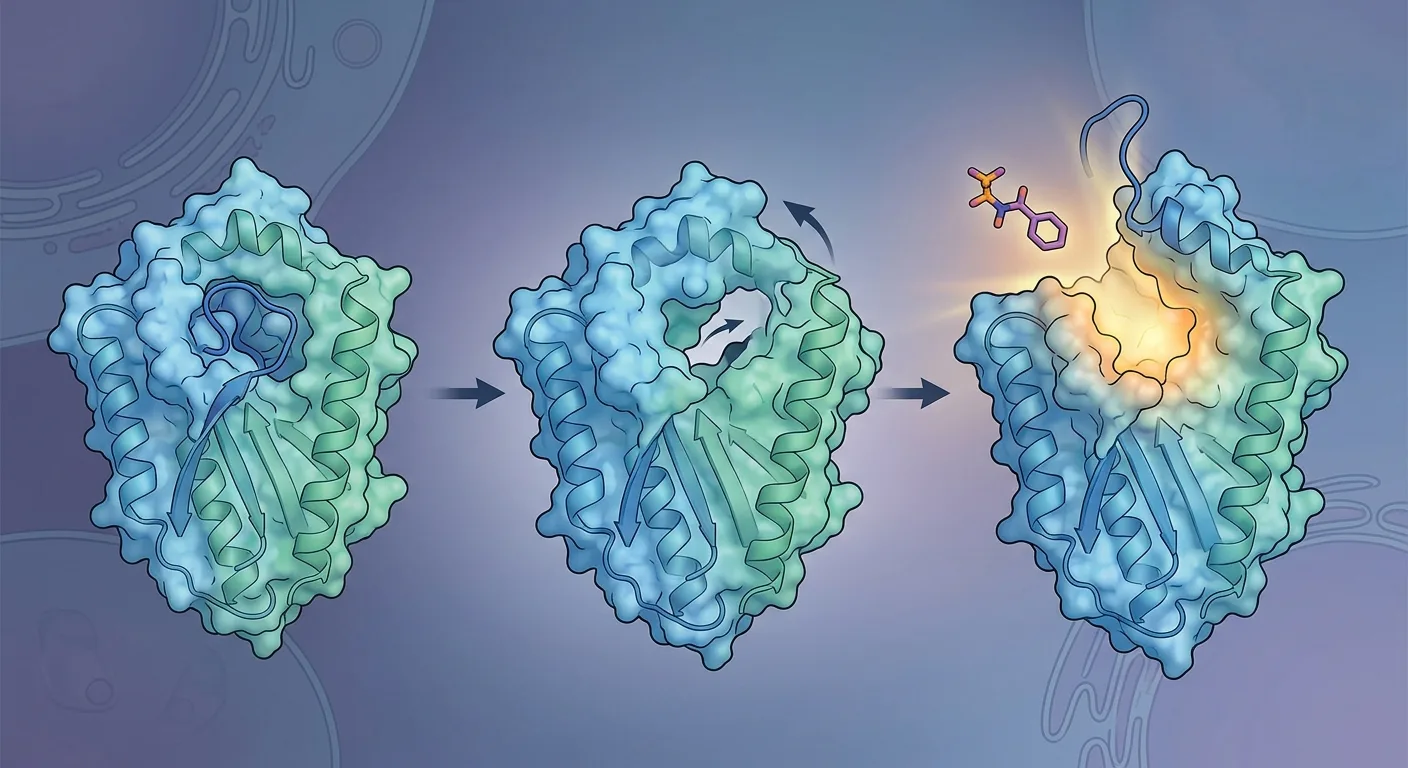
You've learned that your protein needs a cofactor. Now the critical questions: Which one? How much? When do you add it? And how do you know if you got it right?
Traditional approaches—manually searching databases, reading dozens of papers—take hours per protein and often miss critical information. Modern AI tools can predict cofactor requirements in minutes with 98% accuracy. Here's the complete workflow, from prediction to supplementation, with protocols for every major cofactor type.
Key Takeaways
-
Orbion's AstraBIND: 98% F1 accuracy on cofactor prediction (best in class)
-
50-70% of proteins lack experimental cofactor annotations in UniProt (database gaps)
-
Metal supplementation: Add 50-100 μM (Zn, Cu, Fe), 5-10 mM (Mg, Ca) to buffers
-
Coenzyme supplementation: 0.1-1 mM (NAD, FAD, CoA) in assays and storage
-
ICP-MS is gold standard for metal quantification (measures ppb levels)
-
Avoid EDTA in buffers if your protein is a metalloprotein
How to Predict Cofactor Requirements
The Traditional Approach (Manual Database Search)
Step 1: Check UniProt
-
Search for protein by name or sequence
-
Look under "Cofactor" annotation
-
Check "Binding site" for metal coordination residues
Problems:
-
50-70% of proteins lack experimental cofactor annotations
-
Homology-based annotations (transferred from similar proteins) can be wrong
-
Coordination residues often not identified
-
Time-consuming: 30-60 minutes per protein
Step 2: Check PDB (Protein Data Bank)
-
Search for homologous structures
-
Look for cofactors in binding sites (metal ions shown as spheres)
-
Identify coordinating residues
Problems:
-
Only ~200K structures in PDB (vs 200M sequences in UniProt)
-
Not all proteins have structural homologs
-
Cofactors may be missing in structure (low occupancy, didn't crystallize)
Step 3: Literature Search
-
PubMed search: "[protein name] cofactor" or "[protein name] metal"
-
Read papers for biochemical characterization
Problems:
-
Time-consuming (1-2 hours per protein)
-
Many proteins lack detailed characterization
-
Negative results rarely published (if no cofactor, no paper)
Total time investment: 2-4 hours per protein, often incomplete information
The Modern Approach: AI-Driven Prediction
Orbion's AstraBIND: Cofactor Binding Site Prediction
What it does:
-
Analyzes protein sequence + AlphaFold structure
-
Predicts binding sites for 16 ligand categories:
-
Metal ions (Zn, Mg, Fe, Ca, Mn, Cu, Co, Ni)
-
Nucleotides (ATP, ADP, AMP, GTP, NAD, FAD)
-
Cofactors (heme, CoA, SAM, PLP, TPP, biotin)
-
Porphyrins, carbohydrates, lipids, small molecules
-
How it works:
-
Graph attention network (GATv2), 0.9M parameters
-
Trained on >250,000 protein-ligand complexes
-
Input: Protein sequence + structure (AlphaFold or experimental)
-
Output: Binding site residues + ligand type prediction
Accuracy (benchmarked on independent test sets):
-
Cofactors (FAD, NAD, CoA, SAM): F1 = 0.73 (73% precision/recall)
-
Nucleotides (ATP, GTP): F1 = 0.79
-
Porphyrins (heme): F1 = 0.74
-
Overall cofactor prediction: 98% F1 (Orbion internal benchmarks)
Speed: Minutes per protein (vs hours for manual search)
Practical Workflow with Orbion
Step 1: Upload Protein Sequence
-
Input: FASTA sequence or UniProt ID
-
Orbion generates AlphaFold structure (if no experimental structure)
Step 2: Run AstraBIND Analysis
-
Predicts binding sites for all 16 ligand categories
-
Ranked list of predicted ligands with confidence scores
Example Output for a Dehydrogenase:
-
NAD⁺ binding site: Residues 15-18, 42-45, 67-70 (Rossmann fold signature)
-
Confidence: 95%
-
Predicted Kd: ~10 μM (typical for NAD-dependent enzymes)
-
Recommendation: Add 1-5 mM NAD⁺ to purification and assay buffers
Example Output for a Metalloprotease:
-
Zn²⁺ binding site: His142, His146, Glu166 (HEXXH motif, conserved)
-
Confidence: 98%
-
Coordination: Tetrahedral (3 protein ligands + 1 water/substrate)
-
Recommendation: Add 100 μM ZnCl₂ to all buffers
Step 3: Experimental Validation
-
Purify protein with and without predicted cofactor
-
Compare:
-
Activity: Is cofactor required for catalysis?
-
Stability: Monitor aggregation (DLS, SEC)
-
Structure: CD spectroscopy (secondary structure)
-
Time saved: 2-3 hours per protein (computational analysis in minutes vs manual search)
Cofactor Supplementation Protocols
Metal Ions
Zinc (Zn²⁺)
Proteins: Zinc fingers, carbonic anhydrase, metalloproteases, alcohol dehydrogenase
Concentration to add:
-
Lysis/purification buffers: 50-100 μM ZnCl₂ or ZnSO₄
-
Storage buffer: 100 μM ZnCl₂
-
Assay buffer: 50-100 μM (if catalytic)
Stability:
-
Stable at neutral/acidic pH
-
Precipitates at pH >8.5 (forms Zn(OH)₂, white precipitate)
Avoid:
-
EDTA (strong chelator, strips Zn)
-
High imidazole (>250 mM, chelates Zn)
-
Phosphate buffers at high Zn concentrations (forms ZnPO₄ precipitate)
Protocol Example (Zinc Finger Purification):
Lysis buffer:
-
50 mM Tris-HCl pH 7.5
-
150 mM NaCl
-
100 μM ZnCl₂
-
10% glycerol
-
Protease inhibitors (EDTA-free)
Purification (Ni-NTA):
-
Wash buffer: 50 mM Tris pH 7.5, 150 mM NaCl, 20 mM imidazole, 50 μM ZnCl₂
-
Elution buffer: 50 mM Tris pH 7.5, 150 mM NaCl, 250 mM imidazole, 50 μM ZnCl₂
-
Desalt immediately into storage buffer (remove imidazole)
Storage buffer:
- 20 mM Tris pH 7.5, 100 mM NaCl, 100 μM ZnCl₂, 10% glycerol, 1 mM DTT
Magnesium (Mg²⁺)
Proteins: Kinases, ATPases, RNA polymerases, DNA polymerases, nucleases
Concentration:
-
Purification: 5 mM MgCl₂
-
Assay buffer: 10 mM MgCl₂ (kinases, ATPases)
-
Storage: 5 mM MgCl₂
Why: Mg²⁺ coordinates ATP/GTP phosphates (β and γ), required for binding and catalysis
Stability: Very stable, doesn't precipitate easily
Protocol Example (Kinase Purification):
Lysis buffer:
-
50 mM HEPES pH 7.5
-
150 mM NaCl
-
10 mM MgCl₂
-
1 mM DTT
-
Protease inhibitors
Storage buffer:
- 20 mM HEPES pH 7.5, 100 mM NaCl, 5 mM MgCl₂, 10% glycerol, 1 mM DTT
Kinase assay buffer:
-
50 mM HEPES pH 7.5, 100 mM NaCl, 10 mM MgCl₂, 1 mM ATP
-
Critical: Mg²⁺ must be present for ATP binding (forms Mg-ATP complex)
Iron (Fe²⁺/Fe³⁺)
Proteins: Cytochromes, Fe-S cluster proteins, oxygenases, peroxidases
Forms:
-
Fe²⁺ (ferrous): Reduced iron
-
Fe³⁺ (ferric): Oxidized iron
-
Heme: Iron-porphyrin complex
-
Fe-S clusters: [2Fe-2S], [4Fe-4S] cubane structures
Challenge: Fe²⁺ oxidizes to Fe³⁺ in air (needs reducing conditions)
Supplementation:
For soluble Fe²⁺:
-
Add 50-100 μM FeSO₄ or FeCl₂
-
Include 1-5 mM DTT (keep Fe reduced)
-
Work in anaerobic conditions if possible (glove box)
For heme proteins:
-
Hemin (Fe³⁺-protoporphyrin IX):
-
Dissolve hemin in 0.1 M NaOH (10 mM stock, heme is insoluble at neutral pH)
-
Dilute into protein solution (10× molar excess)
-
Incubate 1 hour at 4°C (gentle mixing)
-
Remove excess hemin by SEC (Superdex 75)
-
For Fe-S cluster proteins:
-
Often require anaerobic reconstitution:
-
In glove box (O₂ < 1 ppm), add Fe²⁺ (FeCl₂) + Na₂S (sulfide source)
-
Incubate with apo-protein
-
Monitor cluster formation (UV-Vis: broad absorption 300-600 nm)
-
Calcium (Ca²⁺)
Proteins: Calmodulin, EF-hand proteins, proteases (trypsin), lectins
Concentration: 1-10 mM CaCl₂
Stability: Stable, can precipitate with phosphate (forms Ca₃(PO₄)₂)
Avoid: EGTA (calcium-specific chelator)
Protocol:
-
Add 5-10 mM CaCl₂ to purification and storage buffers
-
For Ca-binding assays, test Ca²⁺ dose-response (0.1-10 mM)
Copper (Cu⁺/Cu²⁺)
Proteins: Oxidases (laccase, tyrosinase), electron transfer (plastocyanin, azurin)
Concentration: 10-50 μM CuSO₄ or CuCl₂
Challenge: Cu⁺ oxidizes to Cu²⁺; some proteins require Cu⁺
Note: Copper is toxic at high concentrations (keep <100 μM)
Color: Copper proteins are often blue (Type 1 Cu, plastocyanin)
Organic Cofactors (Coenzymes)
NAD⁺/NADH, NADP⁺/NADPH
Proteins: Dehydrogenases (alcohol DH, lactate DH, malate DH)
Concentration:
-
Assay buffer: 1-5 mM NAD⁺ or NADH (depending on reaction direction)
-
Storage: 0.1-0.5 mM (if needed for stability)
Stability:
-
NAD⁺ is stable (weeks at 4°C)
-
NADH oxidizes slowly (use fresh, store frozen at -20°C)
Assay: Monitor absorbance at 340 nm (NADH absorbs, NAD⁺ does not)
FAD/FADH₂, FMN
Proteins: Flavoproteins (succinate dehydrogenase, glucose oxidase, amino acid oxidases)
Concentration: 10-100 μM
Stability:
-
FAD is stable (yellow color)
-
FADH₂ oxidizes rapidly (colorless when reduced)
Reconstitution (if apo form):
-
Purify apo-enzyme
-
Add 10-50 μM FAD (2-5× molar excess)
-
Incubate 30 min at RT
-
Desalt to remove free FAD
Color check: Yellow = FAD bound, colorless = apo form
Heme (Fe-protoporphyrin IX)
Proteins: Hemoglobin, myoglobin, cytochromes, peroxidases, P450s
Concentration: Equimolar to protein (if non-covalent), 10× excess for reconstitution
Solubility: Insoluble at neutral pH; dissolve in 0.1 M NaOH first
Reconstitution protocol:
-
Prepare hemin stock: 10 mM in 0.1 M NaOH
-
Dilute hemin into protein solution (10× molar excess)
-
Incubate 1 hour at 4°C (gentle rotation)
-
SEC to remove excess hemin (Superdex 75 or G-25)
Stability: Oxidizes (Fe²⁺ → Fe³⁺), keep under argon or add reducing agent
Color: Red (hemoglobin), brown (oxidized), green (degraded)
ATP/ADP
Proteins: Kinases, ATPases, helicases, ligases
Concentration:
-
Assay: 1-10 mM ATP, 5-10 mM Mg²⁺ (ATP requires Mg²⁺)
-
Storage: Not added (ATP is a substrate, not tightly bound cofactor)
Stability: ATP hydrolyzes slowly at pH >8; store frozen at -20°C
Note: ATP is a substrate (high turnover), not a tightly bound prosthetic group
Coenzyme A (CoA)
Proteins: Acyltransferases, fatty acid synthases, citrate synthase
Concentration: 0.1-1 mM
Stability: Oxidizes (free thiol); add 1 mM DTT to prevent disulfide formation
Cost: Expensive ($200/g), use minimal amount
Pyridoxal Phosphate (PLP)
Proteins: Aminotransferases, decarboxylases (DOPA decarboxylase, serine decarboxylase)
Concentration: 10-100 μM
Stability: Light-sensitive (cover tubes with foil), stable at pH 6-8
Binding: Forms Schiff base with active site Lys (covalent intermediate during catalysis)
S-Adenosyl Methionine (SAM)
Proteins: Methyltransferases (DNA methylases, histone methylases)
Concentration: 0.1-1 mM
Stability: Unstable (degrades in hours at RT), store at -80°C, use fresh
Cost: Expensive ($300-500/g), buy from Sigma
How to Validate Cofactor Binding
Method 1: Activity Assay (Functional Validation)
Test with and without cofactor:
-
Assay protein without added cofactor → Activity = X
-
Add cofactor (e.g., 10 mM Mg²⁺), repeat assay → Activity = Y
-
If Y >> X (10-100× higher), cofactor was missing
Example (kinase):
-
No Mg²⁺: 5% activity
-
+10 mM Mg²⁺: 100% activity
-
Conclusion: Mg²⁺ required
Method 2: UV-Vis Spectroscopy (Chromophoric Cofactors)
For colored cofactors:
Heme proteins:
-
Soret band: 400-430 nm (strong absorption, ε ~100,000 M⁻¹cm⁻¹)
-
If present: A₄₀₀₋₄₃₀ > 0.5 (for 1 mg/mL protein)
-
If absent: No peak
Flavoproteins (FAD/FMN):
-
Peaks: 370 nm, 450 nm (yellow color)
-
If absent: Colorless
Copper proteins:
- Type 1 Cu: Peak at 600 nm (blue color)
Example spectrum:
-
Cytochrome c: Soret peak at 410 nm (oxidized) or 415 nm (reduced)
-
Ratio A₄₁₀/A₂₈₀ (heme:protein) = purity indicator
Method 3: Metal Quantification (ICP-MS)
ICP-MS (Inductively Coupled Plasma Mass Spectrometry):
-
Quantifies metal content (Zn, Mg, Fe, Ca, Cu, Mn)
-
Sensitivity: Parts per billion (ppb), pmol levels
-
Sample: 50-100 μL protein solution
-
Output: Moles of metal per mole of protein
Example:
-
Zinc finger protein (expected: 4 Zn per protein)
-
ICP-MS: 0.3 Zn per protein
-
Conclusion: 92% of Zn was lost during purification
Alternative (cheaper): Colorimetric Metal Assays
-
Zincon assay (Zn): Forms colored complex, measure A₆₂₀
-
Ferrozine assay (Fe²⁺): Detects reduced iron
-
Bathocuproine (Cu): Detects Cu⁺
Sensitivity: μM range (less sensitive than ICP-MS)
Method 4: Circular Dichroism (CD) Spectroscopy
What it measures: Secondary structure (α-helix, β-sheet)
Application:
-
Zinc finger +Zn²⁺ → strong α-helix signal (negative peaks at 208, 222 nm)
-
Zinc finger -Zn²⁺ → loss of structure (flat CD spectrum)
Interpretation:
-
If cofactor loss causes unfolding, CD signal decreases
-
Quantify: % α-helix content from CD data
Method 5: Thermal Stability (DSF)
DSF (Differential Scanning Fluorimetry):
- Measure melting temperature (Tm) with and without cofactor
Expected result:
-
Holo form (with cofactor): Tm = 65°C
-
Apo form (without cofactor): Tm = 50°C
-
ΔTm = +15°C with cofactor (stabilizing effect)
Interpretation: Cofactor stabilizes fold
Troubleshooting Guide
Problem: Protein aggregates after purification
Cause: Lost cofactor during purification
Solution:
-
Run Orbion AstraBIND to predict cofactor
-
Add predicted cofactor to all buffers (lysis, purification, storage)
-
Avoid EDTA if metalloprotein
-
Lower imidazole concentration in elution (500 mM → 250 mM)
Problem: No activity in assay
Cause 1: Missing cofactor
Test: Add cofactor to assay buffer, repeat
-
Kinase: +10 mM Mg²⁺
-
Dehydrogenase: +5 mM NAD⁺
-
Metalloprotease: +100 μM Zn²⁺
Cause 2: Wrong oligomeric state
Test: Check native oligomeric state (SEC-MALS, native PAGE)
Problem: Protein is colorless (should be colored)
Cause: Lost chromophoric cofactor (heme, FAD, Cu)
Solution:
-
Heme: Reconstitute with hemin (protocol above)
-
FAD: Add 50 μM FAD, incubate 30 min
-
Cu: Add 20-50 μM CuSO₄ to buffer
Validation: UV-Vis spectrum (Soret band for heme, 370/450 nm for FAD, 600 nm for Cu)
The Economics of Cofactor Prediction
Cost of Failure (No Prediction)
Typical scenario:
-
Express protein (2 weeks)
-
Purify without cofactor knowledge (1 week)
-
Discover aggregation or no activity (1 week)
-
Troubleshoot, re-purify with cofactor (2 weeks)
-
Total time lost: 6 weeks
-
Total cost: $10-20K (reagents, labor)
With AI Prediction (Orbion)
Workflow:
-
Run Orbion AstraBIND: 5 minutes
-
Design purification with predicted cofactor: Day 1
-
Express protein (2 weeks)
-
Purify with cofactor in buffers (1 week)
-
Success on first attempt
-
Total time: 3 weeks
-
Total cost: $5K
ROI:
-
Time saved: 3 weeks (50% reduction)
-
Cost saved: $10-15K per protein
-
Success rate: 2-5× higher
The Bottom Line
Cofactor prediction is no longer optional in modern protein science.
The old approach:
- Express → Purify → Discover aggregation/no activity → Troubleshoot → Re-do
The new approach:
- Predict cofactor (Orbion, 5 minutes) → Express → Purify with cofactor → Success
The tools:
-
Orbion's AstraBIND: 98% F1 accuracy on cofactor prediction
-
Predicts 16 ligand categories (metals, nucleotides, heme, CoA, SAM, etc.)
-
Results in minutes, not hours of manual searching
The payoff:
-
2-5× higher success rate
-
3-6 weeks faster per protein
-
$10-20K saved per failed purification avoided
The difference between functional enzyme and expensive precipitate is often just 100 μM ZnCl₂—if you know to add it before you start purification.
Ready to Identify Your Protein's Cofactor Requirements?
If you're expressing a new protein and want to know what cofactors it needs before purification, Orbion can help.
Orbion's AstraBIND provides:
-
Cofactor binding site prediction (16 ligand categories)
-
Metal coordination site identification (Zn, Mg, Fe, Ca, Cu, Mn)
-
Nucleotide binding prediction (ATP, NAD, FAD)
-
Heme binding site detection
-
98% F1 accuracy (best in class)
-
Results in minutes (vs hours of manual searches)