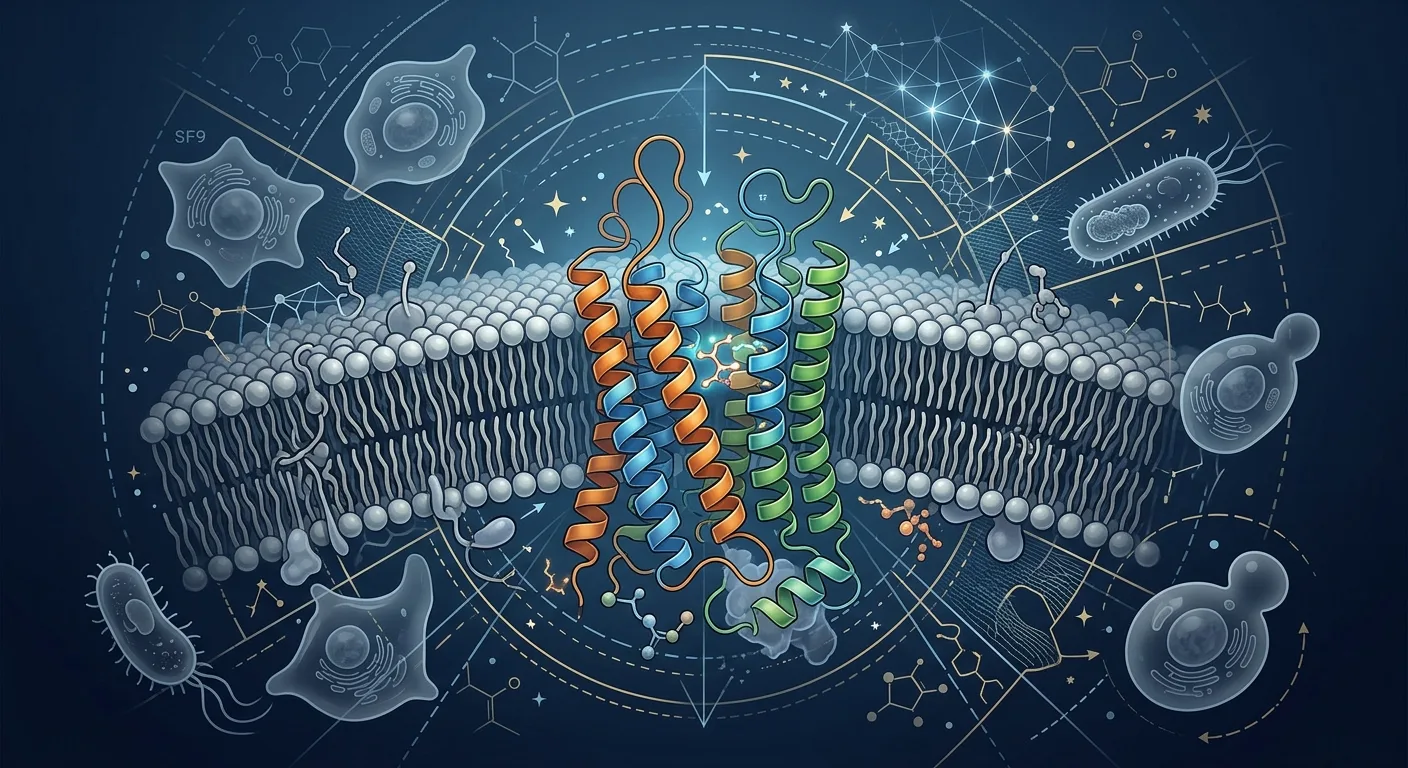
You have a 7-TM GPCR that finally expresses in Sf9 cells at 1 mg/L of membrane fraction. The grant deadline says "cryo-EM structure by Q4," the binding assays want plate-format throughput, and the literature has at least eight reasonable reconstitution options. You can pick detergent micelles in DDM, exchange into LMNG-CHS, reconstitute into MSP1D1 nanodiscs with a defined POPC:POPG mixture, or skip detergent entirely and extract directly with styrene-maleic acid copolymer. Each of these decisions cascades into different timelines, different ligand-binding behavior, and—often—different structural answers.
There is no universally correct membrane mimetic. There is a correct membrane mimetic for this protein and this experiment, and the cost of choosing wrong is rarely apparent until you are six months into a structural campaign.
Key Takeaways
-
Detergent micelles remain the workhorse for fast extraction, screening, and many cryo-EM workflows, but the choice of detergent (DDM, LMNG, OG, GDN) sets a stability and signal-to-noise ceiling that you cannot exceed downstream
-
MSP-based nanodiscs offer the cleanest tradeoff between defined lipid environment and analytical compatibility, with disc diameter (MSP1D1 → MSP1E3D1 → MSP2N2) determining oligomeric capacity and lipid stoichiometry
-
SMALPs and DIBMA bypass detergent entirely, capturing native annular lipids during extraction—at the cost of heterogeneity, divalent cation sensitivity, and limited compatibility with His-tag IMAC at standard imidazole concentrations
-
Native lipid retention is a continuum: SMALP/DIBMA > nanodiscs reconstituted with brain polar extract > nanodiscs with defined synthetic lipids > LMNG-CHS micelles > DDM micelles > OG micelles
-
Selection should follow the readout, not the protein: cryo-EM tolerates LMNG, GDN, or nanodiscs; NMR strongly prefers small nanodiscs or short-chain detergents; functional binding assays often perform best in nanodiscs or SMALPs that preserve allosteric lipid sites
The Three Systems at a Physical Level
Before comparing protocols, it is worth being precise about what each system is, because the language used in the literature obscures real physical differences.
Detergent Micelles
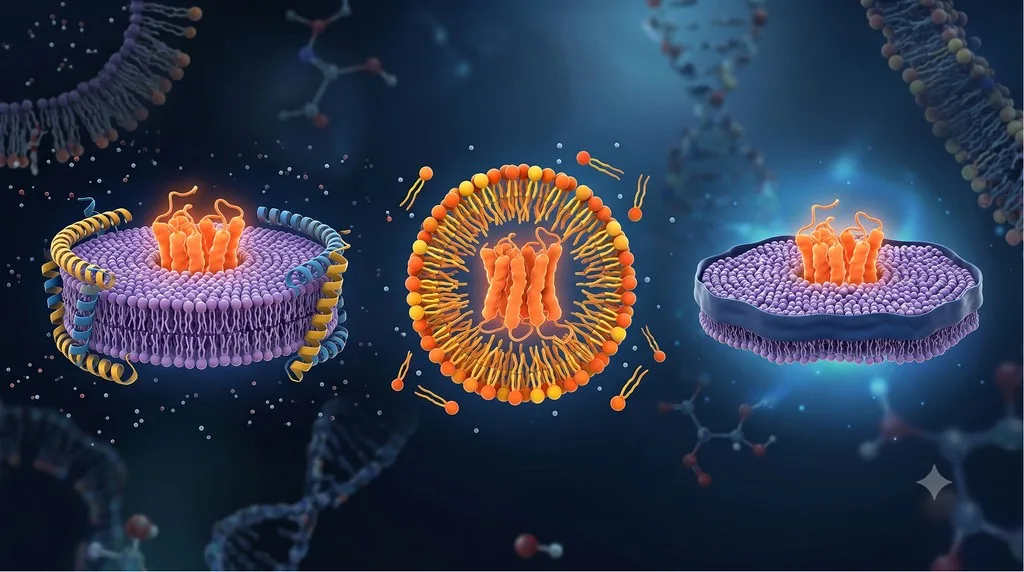
A detergent micelle is a kinetic assembly of amphipathic molecules held together by the hydrophobic effect. Each micelle exists in dynamic equilibrium with free detergent monomers in solution; the concentration of free monomers at equilibrium is the critical micelle concentration (CMC). Below the CMC, micelles do not exist. Above it, the free monomer concentration stays approximately fixed at the CMC and additional detergent partitions into more micelles.
For membrane protein work, the relevant numbers are not just CMC but the aggregation number (monomers per micelle), the micelle molecular weight, and the hydrodynamic radius. A DDM micelle is ~70 kDa with ~120 monomers; an LMNG micelle is ~90 kDa but kinetically much more stable due to the bis-headgroup architecture; an OG micelle is ~25 kDa with a CMC of ~20 mM—two orders of magnitude higher than DDM.
The "protein-detergent complex" that you see in SEC or by cryo-EM is the protein wrapped by a belt of detergent monomers, often surrounded by what is functionally a single hybrid micelle. The lipid content of that belt is small (typically 1–10 lipids per protein after most purifications), and these lipids are the "co-purified" or "annular" lipids that occasionally appear in crystal structures.
MSP-Based Nanodiscs
A nanodisc is a defined, monodisperse lipoprotein particle: a planar lipid bilayer patch circumscribed by two copies of an engineered membrane scaffold protein (MSP) derived from apolipoprotein A-I (Bayburt & Sligar, 2003). The MSP wraps around the lipid edge like a belt, shielding the hydrophobic acyl chains from solvent and constraining the bilayer to a fixed diameter.
Crucially, the bilayer inside a nanodisc is a true bilayer—two leaflets of lipid, with the membrane protein embedded as it would be in a vesicle, except that the patch is small enough (typically 8–17 nm in diameter) to remain soluble. The protein experiences a defined lipid composition that the experimenter chose, the membrane has flat geometry rather than the high curvature of a micelle, and the construct is stable for days to weeks at 4°C (Denisov & Sligar, 2016).
The disc diameter is set by the MSP variant. MSP1D1 produces ~10 nm discs; MSP1E3D1 produces ~13 nm discs; MSP2N2 produces ~17 nm discs. Saposin-based and "covalently circularized" cNW nanodiscs offer alternative geometries with their own tradeoffs.
SMALPs and DIBMA Particles
Styrene-maleic acid (SMA) copolymer is an amphipathic polymer that spontaneously inserts into lipid bilayers and excises ~10 nm disc-like particles directly from native membranes (Knowles et al., 2009). The resulting "SMALP" (SMA lipid particle) is conceptually similar to a nanodisc, except that the belt is a synthetic polymer rather than a scaffold protein, and the lipid content is the native annular lipid environment of the target protein, not a chosen synthetic mixture.
DIBMA (diisobutylene-maleic acid) is a chemically distinct polymer with similar function but improved compatibility with divalent cations, lower UV absorbance at 280 nm, and slightly different geometric properties (Oluwole et al., 2017). Newer polymers (Sokalan, AASTY, glyco-DIBMA, zSMA) extend the chemical envelope further.
The defining property of polymer-based extraction is that it does not require a detergent step. The polymer goes directly into the membrane, and the membrane protein never sees a detergent micelle. For proteins whose function depends on tightly bound lipids—rhodopsin-PI, ANT-cardiolipin, MscL-PE—this is the only system that reliably preserves those interactions.
Detergent Selection: The Eight Detergents You Actually Use
The detergent literature is enormous, but in practice perhaps eight detergents account for the vast majority of structural and functional membrane protein work. The relevant properties are summarized below, with the implications.
| Detergent | CMC (mM, in water) | Micelle MW (kDa) | Typical Working Conc. | Common Use |
|---|---|---|---|---|
| DDM (n-dodecyl-β-D-maltoside) | 0.17 | ~70 | 0.02–0.05% | Workhorse extraction; SEC stable; crystallization in vapor diffusion |
| LMNG (lauryl maltose neopentyl glycol) | 0.001 | ~90 | 0.001–0.01% | Highly unstable proteins; cryo-EM; long-term storage |
| GDN (glyco-diosgenin) | 0.018 | ~70 | 0.005–0.02% | GPCRs and other steroid-binding proteins; cryo-EM-friendly |
| OG (n-octyl-β-D-glucoside) | 20 | ~25 | 0.7–1.2% | Crystallization (small micelle); fast removal by dialysis |
| DM (n-decyl-β-D-maltoside) | 1.8 | ~33 | 0.15–0.25% | Intermediate stability; some GPCR crystallography |
| FosCholine-12 | 1.5 | ~22 | 0.05–0.2% | β-barrel proteins; aggressive solubilization |
| Digitonin | 0.4 | variable | 0.05–0.1% | Native-like for some complexes; heterogeneous batches |
| Triton X-100 | 0.23 | ~80 | 0.5–1% | Extraction only; rarely retained downstream |
CMC and the Purification Problem
CMC determines how much free detergent is in your buffer at any time. A high-CMC detergent (OG at 20 mM, ~0.6%) means that any time the sample is in buffer above the CMC, there is a substantial mass of free detergent contributing to UV absorbance, NMR background, and buffer rheology. A low-CMC detergent (LMNG at 0.001 mM) means free detergent is essentially negligible.
This matters in three places:
-
Concentration by ultrafiltration. Detergent in micelles is partially retained; free detergent below the cutoff is not. Concentrating a DDM sample raises the detergent concentration only modestly. Concentrating an OG sample raises detergent dramatically and can denature the protein.
-
Dialysis for crystallization. Low-CMC detergents do not dialyze out. OG can be reduced below CMC by dialysis; DDM cannot.
-
Background in optical methods. SPR baselines and ITC heat-of-dilution corrections are larger for high-CMC detergents because free detergent is being injected and diluted with the sample.
Micelle Size and Cryo-EM
Cryo-EM particle picking and alignment depend on the contrast between protein and surrounding solvent. A large detergent micelle wraps the protein in a featureless density that contributes signal mass without contributing alignment information. For a small membrane protein (e.g., 40 kDa), an 80 kDa DDM micelle dominates the particle and can make alignment difficult.
LMNG and GDN produce micelles in a similar size range to DDM but with much greater kinetic stability—the kinetic on/off rate of detergent monomers is dramatically lower, which translates into less micelle "breathing" and tighter, more reproducible particles. For small membrane proteins in cryo-EM, LMNG or GDN is often the right choice. For larger complexes (>200 kDa), the micelle is a smaller fraction of the total mass and DDM is usually fine (Chae et al., 2010).
LMNG and CHS: The De Facto GPCR Standard
LMNG mixed with cholesteryl hemisuccinate (CHS) at ~5:1 (w/w) has become the de facto extraction and stabilization system for class A GPCRs and many transporters. The bis-headgroup architecture of LMNG creates a quasi-bilayer environment around the protein, and CHS provides cholesterol-mimetic stabilization at conserved cholesterol-binding sites. The combination produces protein-detergent complexes that are stable for weeks at 4°C and amenable to most downstream workflows.
The cost is real: LMNG is expensive (~$500/g), it does not dialyze, and for crystallization in lipidic cubic phase (LCP) one usually has to exchange back to a smaller detergent before reconstitution into monoolein. For cryo-EM workflows that do not require detergent exchange, LMNG-CHS is hard to beat.
Nanodisc Design: Disc Size, Lipid Choice, and Stoichiometry
The power of nanodiscs is also their burden: there are too many variables, and each one matters. A poorly designed nanodisc preparation produces a heterogeneous, polydisperse mess that is worse than detergent. A well-designed one produces the cleanest reconstitution system available.
Disc Diameter Selection
The two MSP molecules circumscribe the disc, and disc diameter is essentially proportional to MSP length. The standard variants:
| MSP Variant | Disc Diameter | Lipids per Disc (POPC) | Suitable For |
|---|---|---|---|
| MSP1D1ΔH5 | ~8 nm | ~85 | Small monomeric proteins |
| MSP1D1 | ~10 nm | ~130 | Most monomeric integral proteins, including 7-TM GPCRs |
| MSP1E1 | ~11 nm | ~165 | Mid-size proteins |
| MSP1E3D1 | ~13 nm | ~250 | Larger proteins; receptor-G-protein complexes |
| MSP2N2 | ~17 nm | ~440 | Large complexes; oligomers; transporters with regulatory partners |
| cNW (covalent) | 9–25 nm | varies | Where MSP dissociation is a concern |
Sizing is not arbitrary. A disc that is too small forces the protein to sit at the edge, distorting the bilayer and exposing the protein to belt interactions. A disc that is too large leaves substantial empty bilayer around the protein, which is fine for some assays but reduces protein density and adds free-lipid signal in techniques sensitive to lipid background.
For a 7-TM receptor of ~40 kDa, MSP1D1 (≈100 lipids around the protein) is usually the right starting point. For a receptor in complex with a heterotrimeric G protein (~85 kDa), MSP1E3D1 or MSP2N2 is appropriate. For a homo-tetrameric channel, MSP2N2 or larger.
Lipid Composition
The bilayer inside a nanodisc is whatever you put in. This is both a feature and a hazard.
Defined-composition strategies:
-
POPC alone: A baseline "lipid-bilayer-shaped" environment. Useful for screening but biologically meaningless—almost no native membrane is pure POPC.
-
POPC:POPG mixtures (e.g., 3:1): Adds negative surface charge approximating bacterial or mitochondrial inner-leaflet composition.
-
POPC:DOPE mixtures: Introduces some non-bilayer-preferring lipid, which matters for proteins that interact with curvature-stressed regions.
-
POPC:cholesterol (e.g., 4:1): For eukaryotic plasma-membrane proteins, especially GPCRs.
-
Brain polar lipid extract or soybean total lipid extract: A "close enough to native" mix when the native composition is unknown.
-
Reconstituted native-mimetic mixtures: For high-stakes structural work, the literature for the relevant native membrane is consulted and a defined 5–7 lipid mixture is assembled.
Reconstitution Stoichiometry
The reconstitution reaction—detergent-solubilized membrane protein + detergent-solubilized lipid + apo-MSP, followed by detergent removal with Bio-Beads—has three concentrations that have to be right:
-
MSP:lipid ratio. This determines the disc size; it should match the design diameter. For MSP1D1 with POPC, this is ~1:65 (mole basis) per MSP, or 1:130 per disc.
-
Protein:disc ratio. Usually 0.1–1.0. Above 1:1, multiple proteins crowd into single discs, producing heterogeneity. Below 0.1, most discs are empty, and you waste material.
-
Detergent ratio. During the reaction, detergent must be above CMC to keep everything soluble. Bio-Bead addition removes detergent quickly enough that the lipid bilayer reassembles around the MSP belt.
A typical reconstitution at 100 μM total MSP with MSP1D1 and POPC: 100 μM MSP, 6.5 mM POPC, 10–30 μM target protein, 14 mM DDM (background), 4 h incubation on ice with 5–10 mg/mL Bio-Beads, then dialysis or SEC for cleanup.
Downstream Compatibility
Nanodiscs are unusually compatible across techniques:
-
SEC-MALS: The defined disc mass (~150 kDa for empty MSP1D1) allows unambiguous detection of protein incorporation and stoichiometry.
-
SPR: Discs can be captured via His-tagged MSP or biotinylated MSP for surface immobilization with the protein in a native-like environment.
-
Solution NMR: Small discs (MSP1D1ΔH5 or saposin nanoparticles) tumble fast enough for solution NMR; methyl-TROSY approaches extend this to larger systems.
-
Cryo-EM: Reconstructions readily resolve the disc rim density and often the lipid bilayer at lower resolution.
-
Functional assays (ligand binding, transport): Nanodiscs preserve activity for most receptors and many transporters, with the caveat that transport assays in a sealed compartment are not possible (no inside/outside).
SMALPs and DIBMA: Detergent-Free Extraction
The SMALP approach inverts the conventional workflow. There is no detergent step.
Mechanism
SMA copolymer (typically 2:1 styrene:maleic acid, 7–15 kDa, hydrolyzed to expose the maleic acid carboxylates) is amphipathic at neutral pH. When added to a membrane suspension at 1–3% (w/v), the polymer inserts spontaneously into the bilayer. Within minutes to hours, the polymer molecules organize into ring-like belts around small (~10 nm) discs of bilayer, excising those discs from the larger membrane.
The result is a solution of SMALP particles—each one a piece of the original membrane with whatever proteins, lipids, and small molecules were resident in that patch. There is no detergent contact, no lipid exchange, no opportunity for the protein to denature in micelle environments (Lee et al., 2016).
What This Buys You
For a subset of membrane proteins, SMALP extraction is uniquely valuable:
-
Tightly bound lipids are preserved. Cardiolipin on respiratory complexes, phosphoinositides on receptors, sphingolipids on flotillin—these are routinely retained in SMALPs but commonly lost in detergent extraction.
-
Native annular lipid composition is maintained. The lipids surrounding the protein are the ones that surrounded it in the cell.
-
No detergent denaturation. Proteins that are too fragile for any detergent extraction sometimes survive SMALP extraction.
-
Polymer is inexpensive. Bulk SMA is a commodity chemical.
What It Costs You
The constraints are non-trivial:
-
Divalent cation sensitivity. SMA precipitates above ~5 mM Mg²⁺ or Ca²⁺. Many functional assays (kinases, ATPases, channels) require millimolar divalents. DIBMA tolerates higher divalent concentrations (10–20 mM) but is still constrained.
-
Imidazole sensitivity. SMA precipitates at the imidazole concentrations used for IMAC elution (>50 mM). His-tag purification requires alternate strategies (StrepII, FLAG, on-column low-imidazole elution with gradient, or DIBMA).
-
UV background at 280 nm. SMA absorbs at 280 nm, making protein quantitation by UV unreliable. DIBMA is markedly better here.
-
Heterogeneity. SMALP diameter is not monodisperse. Particles span 8–15 nm, with the local lipid composition varying particle-to-particle. For cryo-EM single-particle alignment this can be a problem; for ensemble functional assays it is usually acceptable.
-
Lower extraction efficiency. Many proteins extract at 30–60% with SMA where detergent gives 80–95%. For abundant targets this is fine. For scarce ones it is limiting.
Polymer Choice Matrix
| Polymer | Divalent Tolerance | UV at 280 | Native Lipid Retention | Extraction Efficiency |
|---|---|---|---|---|
| SMA (2:1) | Low (<5 mM) | High | Excellent | 30–60% |
| SMA (3:1) | Low | Moderate | Excellent | 40–70% |
| DIBMA | Moderate (10–20 mM) | Low | Excellent | 30–55% |
| SMA-EA | Moderate | Low | Excellent | 30–50% |
| Glyco-DIBMA | High | Low | Excellent | 30–50% |
| AASTY | High | Low | Excellent | Variable |
For a protein whose function depends on millimolar Mg²⁺, DIBMA or one of the newer polymers is essentially the only option. For a protein where the native lipid is the entire experimental question, SMA gives the best lipid yield.
Saposin and Peptidisc: The Middle Ground
Two newer reconstitution systems split the difference between MSP nanodiscs and detergent.
Saposin nanoparticles (Salipro): Use saposin A as a scaffold rather than MSP. Saposin can self-assemble around a hydrophobic core without requiring a defined detergent-removal step. Salipro particles are size-tunable based on the local protein content and have been used successfully for receptors, transporters, and complexes (Frauenfeld et al., 2016).
Peptidiscs: Use short bi-helical peptides that wrap around membrane proteins after detergent removal. The lipid content is minimal (essentially just co-purified lipids). Peptidisc reconstitution is fast (hours) and does not require lipid choice, which is both an advantage (simplicity) and a limitation (no defined bilayer).
For applications where MSP-based reconstitution is too slow or where lipid composition is not the question, these systems are increasingly competitive.
Decision Tree: Choosing the Right System
The choice depends primarily on the readout and the protein's tolerance, not on aesthetic preferences.
START: What is the primary readout?

├── Cryo-EM structure
│   ├── Protein <60 kDa with TM domain dominating?
│   │   ├── LMNG-CHS (or GDN) micelle → fastest path
│   │   └── MSP1D1 nanodisc → cleaner density, more work
│   ├── Protein >150 kDa or complex?
│   │   ├── DDM-CHS micelle (acceptable noise floor)
│   │   ├── MSP1E3D1 or MSP2N2 nanodisc (preferred for ligand/lipid sites)
│   │   └── SMALP (only if native lipids are mechanistically critical)
│   └── Lipid-dependent function?
│       └── Nanodisc with defined lipid OR SMALP
│
├── Solution NMR
│   ├── Small protein (<30 kDa TM) → MSP1D1ΔH5 nanodisc or saposin
│   ├── Larger → methyl-TROSY in MSP1D1 or short-chain detergent
│   └── Avoid SMALP (polymer background; heterogeneity)
│
├── X-ray crystallography
│   ├── LCP (lipidic cubic phase) → small detergent (OG, NG, LMNG with exchange)
│   ├── Vapor diffusion → DDM, DM, sometimes detergent-mixtures
│   └── Nanodisc crystallography → uncommon but possible for select cases
│
├── Functional binding assay (SPR, BLI, ITC)
│   ├── Need native lipid environment? → Nanodisc or SMALP
│   ├── High throughput screening? → Nanodisc on streptavidin-biotin or anti-His
│   └── Cheap and fast? → Detergent micelle if protein tolerates
│
├── Transport / channel function
│   ├── Sealed compartment needed (Δψ, gradient) → liposomes, not nanodiscs
│   ├── Ligand-gated single channel → nanodisc with planar bilayer reconstitution
│   └── Pump assay (e.g., ATPase) → solution; nanodisc or SMALP both viable
│
└── Drug-discovery screening
    ├── Cell-based primary → not relevant
    ├── Cell-free secondary (binding) → nanodisc (defined, monodisperse, scalable)
    └── Functional secondary → nanodisc for non-transport; reconstituted vesicles for transport
Head-to-Head Comparison
The following table summarizes the practical tradeoffs across the dominant systems.
| Property | DDM Micelle | LMNG-CHS Micelle | MSP1D1 Nanodisc | MSP2N2 Nanodisc | SMALP | DIBMA |
|---|---|---|---|---|---|---|
| Time from membrane to QC | 1–2 days | 1–2 days | 4–7 days | 5–8 days | 1–2 days | 1–2 days |
| Reagent cost per prep | Low | Moderate | Moderate–High | Moderate–High | Low | Low–Moderate |
| Reagent expertise required | Low | Low | Moderate–High | Moderate–High | Moderate | Moderate |
| Lipid composition control | None | Minimal | Full | Full | None (native) | None (native) |
| Native lipid retention | Poor | Modest (CHS only) | Reset to chosen | Reset to chosen | Excellent | Excellent |
| Sample homogeneity | High | High | High (if optimized) | High (if optimized) | Moderate | Moderate |
| Divalent cation compatibility | Excellent | Excellent | Excellent | Excellent | Poor | Moderate |
| IMAC compatibility | Excellent | Excellent | Excellent | Excellent | Poor | Moderate |
| Long-term storage (4°C) | Days–weeks | Weeks–months | Weeks | Weeks | Weeks | Weeks |
| Long-term storage (–80°C) | Variable | Good | Good | Good | Good | Good |
| Cryo-EM compatibility | Good (large proteins) | Excellent | Excellent | Excellent | Moderate | Moderate |
| LCP crystallography | Requires exchange | Requires exchange | Not standard | Not standard | Not compatible | Not compatible |
| Solution NMR | Moderate | Moderate | Good (small) | Limited | Poor (background) | Moderate |
| SPR / BLI | Good | Good | Excellent | Excellent | Moderate | Good |
| Functional assay (binding) | Moderate | Good | Excellent | Excellent | Excellent | Excellent |
| Functional assay (transport) | Poor (no compartment) | Poor (no compartment) | Limited | Limited | Limited | Limited |
The clear pattern: detergent for speed and simplicity, nanodiscs for control and structural quality, polymer-based systems for native-lipid biology and detergent-free workflows.
Practical Protocols: From Membrane to QC
Each system has a characteristic workflow. The details below outline what an experienced membrane protein lab actually does.
Detergent Workflow (DDM, ~2 days)
-
Solubilization. Resuspend membranes at ~5 mg/mL total protein in 50 mM HEPES pH 7.5, 150–500 mM NaCl, 10% glycerol, 1% DDM. Stir 1–2 h at 4°C.
-
Clarification. Ultracentrifuge 100,000×g for 30 min. Insoluble material pellets; PDC stays in supernatant.
-
IMAC. Load on Ni-NTA in buffer with 0.05% DDM. Wash with 30 mM imidazole. Elute with 250 mM imidazole.
-
SEC. Run on Superdex 200 or Superose 6 in 0.02% DDM. Pool the monodisperse peak.
-
QC. SEC, SDS-PAGE, DLS, optional MALS for accurate MW.
LMNG-CHS Workflow (~2 days)
Identical to DDM but using 1% LMNG + 0.2% CHS for solubilization, 0.01% LMNG + 0.002% CHS for wash/SEC. The lower CMC means less detergent in buffer at every step, lower cryo-EM background, and better stability—but the higher cost demands more careful planning of total buffer volumes.
MSP Nanodisc Reconstitution (~5 days)
-
Express and purify MSP separately. MSP1D1 with cleavable His-tag, typically from E. coli BL21(DE3), yielding ~50 mg/L. Cleave the tag (TEV) and concentrate to ~5 mg/mL.
-
Solubilize lipids in detergent. POPC (or chosen mixture) in 100 mM sodium cholate. Total lipid concentration ~50 mM.
-
Express and purify target protein in DDM (or chosen extraction detergent).
-
Mix. Combine target protein, MSP, lipid, detergent at the ratios required for chosen disc diameter and target loading. Incubate 1 h on ice.
-
Remove detergent. Add Bio-Beads SM-2 (~5–10 mg/mL final), tumble 4 h to overnight at 4°C.
-
Cleanup. Remove Bio-Beads, run SEC on Superdex 200. Empty discs elute later than loaded discs; select fractions with the target stoichiometry.
-
QC. SEC-MALS to confirm disc MW and protein incorporation; negative-stain EM for monodispersity; activity assay where available.
SMALP Extraction Workflow (~1.5 days)
-
Prepare SMA polymer. Hydrolyze SMA anhydride in 1 M NaOH at 80°C, neutralize to pH 8 with HCl. Dialyze. Stock to ~2.5% (w/v).
-
Resuspend membranes. ~5 mg/mL total membrane protein in 50 mM Tris pH 8, 150 mM NaCl, 10% glycerol. No detergent.
-
Add SMA. Mix to final 2% (w/v) SMA. Incubate 1 h at room temperature with gentle agitation.
-
Clarify. Ultracentrifuge at 100,000×g for 1 h. Supernatant contains SMALPs.
-
Affinity capture. StrepII or FLAG capture (avoid IMAC with SMA; switch to DIBMA if His-tag is required). Wash, elute.
-
SEC. Superose 6 in SMA-compatible buffer. The SMALP elutes as a broad peak due to size heterogeneity.
-
QC. SDS-PAGE for the target; lipidomics (LC-MS) for native lipid retention; activity assay.
DIBMA Variation
DIBMA replaces SMA at the polymer step. The main practical differences: tolerates more divalent cation, lower 280-nm background (so UV protein quantitation is reliable), and slightly different particle size distribution. The rest of the workflow is identical.
The Bottom Line
| Use Case | Recommended Primary | Recommended Fallback |
|---|---|---|
| Cryo-EM of a 7-TM GPCR + G-protein complex | LMNG-CHS micelle | MSP1E3D1 nanodisc with POPC:cholesterol 4:1 |
| Cryo-EM of a small (<60 kDa) transporter | MSP1D1 nanodisc with POPE:POPG | LMNG-CHS micelle |
| X-ray crystallography in LCP | OG or NG micelle | LMNG with exchange to monoolein |
| Solution NMR of a small β-barrel | MSP1D1ΔH5 nanodisc | DPC micelle (last resort) |
| SPR ligand binding for a receptor | MSP1D1 nanodisc with biotinylated MSP | LMNG-CHS micelle on anti-His |
| Functional ATPase with 5 mM Mg²⁺ | DIBMA particles | MSP1D1 nanodisc with native lipid mix |
| Cardiolipin-dependent respiratory complex | SMALP | DIBMA |
| First-pass biochemistry on a new target | DDM micelle | LMNG-CHS if DDM fails to stabilize |
| Long-term sample storage for biophysics | MSP1D1 nanodisc | LMNG-CHS micelle |
| Drug-discovery secondary binding screen | MSP1D1 nanodisc (biotin-MSP, streptavidin plate) | LMNG-CHS micelle |
| Channel reconstitution for single-channel | Liposome reconstitution | Nanodisc + planar bilayer fusion |
| Lipidomics-grade native lipid analysis | SMALP | DIBMA |
The recurring lesson: detergent is the right answer when speed and simplicity dominate, nanodiscs are the right answer when sample homogeneity and controlled lipid environment dominate, and SMALPs/DIBMA are the right answer when native lipid biology is the experimental question.
Common Failure Modes and How to Diagnose Them
Each system has characteristic ways of failing. Recognizing the failure mode by its signature is faster than re-running the prep blindly.
Detergent Failure: SEC Aggregation Peak Grows Over Time
Signature. SEC of a freshly purified PDC shows a single monodisperse peak. SEC of the same sample 48 hours later shows a growing void-volume peak and a shrinking main peak.
Interpretation. The detergent is not stabilizing the protein on the experimental timescale. The micelle is too "breathable" (high off-rate of detergent monomers), or the lipid:detergent ratio in the PDC has fallen below the threshold needed to maintain native conformation.
Interventions. Switch from DDM to LMNG or LMNG-CHS. Add 0.05% CHS to existing DDM. Reconstitute into nanodiscs immediately after IMAC rather than holding the PDC in micelle for extended periods. If activity is preserved over the short term but lost on storage, freeze in single-use aliquots with 10% glycerol.
Nanodisc Failure: Heterogeneous SEC Profile
Signature. SEC of a nanodisc reconstitution shows multiple peaks: empty discs (~150 kDa for MSP1D1), singly-loaded discs (target + disc), multiply-loaded discs, and high-MW aggregates.
Interpretation. The protein:disc ratio was wrong, or the lipid:MSP ratio was wrong, or the reconstitution was incomplete. Multiply-loaded discs indicate over-loading (target ratio above 1:1). High-MW aggregates indicate either oligomeric protein occupying single discs or aborted reconstitution events.
Interventions. Titrate the protein:MSP ratio downward (e.g., 0.3:1 instead of 1:1) and recover via SEC. For oligomeric proteins, use a larger disc (MSP1E3D1 or MSP2N2). If aggregates dominate, the detergent removal was too fast: reduce Bio-Bead loading and extend the reaction time, or use slow detergent removal by dialysis.
Nanodisc Failure: Loss of Function After Reconstitution
Signature. The detergent-solubilized protein has measurable activity (ligand binding, ATPase, channel current after liposome reconstitution). After nanodisc reconstitution, activity is reduced or absent.
Interpretation. Either the lipid composition is wrong for this protein, or the disc is too small and the protein is being distorted by the MSP belt, or the reconstitution exposed the protein to a denaturing transition.
Interventions. First, change the lipid composition: try POPC:cholesterol 4:1 if you were on pure POPC; try brain polar extract if you were on a defined mixture. Second, increase disc size. Third, reduce the temperature of the Bio-Bead step (4°C, not room temperature) and shorten the total reconstitution time.
SMALP Failure: Polymer Precipitation During IMAC
Signature. SMALP-extracted material is loaded onto Ni-NTA. Upon elution with imidazole, the eluate is cloudy and the target protein is partially or fully lost.
Interpretation. Imidazole has displaced the polymer-stabilized particles, or has destabilized SMA enough to precipitate. This is a fundamental incompatibility, not a tuning problem.
Interventions. Switch to a Strep-tag or FLAG-tag and use the corresponding affinity resin. Alternatively, switch the polymer to DIBMA, which tolerates imidazole substantially better. As a last resort, use low-imidazole gradient elution and immediately exchange into imidazole-free buffer.
SMALP Failure: Inconsistent Particle Size
Signature. Negative-stain EM of SMALP fractions from SEC shows particles spanning 8–16 nm even within a single SEC peak. Cryo-EM 2D classes are smeared.
Interpretation. SMA particle size is intrinsically polydisperse and cannot be tightened to the same monodispersity as MSP nanodiscs.
Interventions. For structural work, accept the heterogeneity and use larger datasets with aggressive 3D classification, switch to a more monodisperse polymer (DIBMA or AASTY), or transfer the protein from SMALP into MSP nanodiscs after extraction (a "SMALP-to-nanodisc" exchange that preserves much of the native annular lipid while gaining the geometric defined-ness of MSP).
Edge Cases and Special Situations
A few protein classes have established preferences that override the general decision tree above.
β-Barrel Outer Membrane Proteins
Bacterial outer membrane β-barrels (OmpA, OmpF, BamA, autotransporters) generally tolerate harsher detergents than α-helical inner membrane proteins. LDAO, FosCholine, and OG are common choices. Nanodisc reconstitution is well-established for β-barrels and frequently gives improved stability over detergent. SMALP works for some β-barrels but extraction efficiency from the outer membrane is often lower than from the inner membrane due to LPS interactions.
Mitochondrial Membrane Proteins
Cardiolipin is essential for function of many inner mitochondrial membrane proteins (ANT, complex IV, F-type ATP synthase). Detergent extraction strips cardiolipin and frequently destroys function. The preferred workflow is SMALP or DIBMA extraction followed by direct biophysics, or MSP nanodisc reconstitution with cardiolipin added explicitly to the lipid mixture (typically 5–20 mol% CL in a POPC:POPE:CL background).
GPCRs With Cholesterol-Binding Sites
Class A GPCRs frequently have CCM (cholesterol consensus motif) sites that contribute to ligand affinity and signaling efficiency. LMNG-CHS provides a partial substitute for cholesterol via the CHS hemisuccinate. For higher-fidelity cholesterol presentation, nanodiscs containing POPC:cholesterol mixtures (often 4:1 or 3:1) are preferred. SMALP extraction can preserve native cholesterol in sufficient quantity but is divalent-incompatible with most downstream signaling assays.
ABC Transporters and Other Lipid-Sensitive Pumps
ABC transporters frequently require specific phospholipid headgroups (PE in bacterial systems, PC + cholesterol in eukaryotic) for activity. Activity in detergent is often low or absent. The preferred workflow is nanodisc reconstitution with a defined lipid mixture matching the expected native composition, with the ATP hydrolysis assay performed in the reconstituted system.
Voltage-Gated Channels
Channels that require a transmembrane voltage to gate cannot be assayed for that gating in nanodiscs (no compartment, no voltage). Liposome reconstitution followed by patch clamp or planar bilayer recording remains the standard. Nanodiscs and SMALPs are useful for structural work and for ligand binding but not for voltage-dependent function.
Quality Control: Knowing What You Have
Whatever system you choose, the QC pipeline determines whether the sample is publication-grade. The non-negotiable steps:
-
SEC. Run analytical SEC (Superdex 200 or Superose 6) on every prep. A clean, monodisperse, symmetric peak is the entry ticket to downstream work. Asymmetric peaks, void-volume shoulders, or shifting peak positions on repeat injections all indicate a sample that needs more work.
-
SDS-PAGE. Confirms the target is present and identifies contaminants. For nanodisc samples, both MSP and target should appear in the expected stoichiometry.
-
DLS. Polydispersity index (PDI) below 0.2 is consistent with a monodisperse sample; PDI above 0.3 indicates problematic heterogeneity. DLS catches early aggregation that SEC may miss.
-
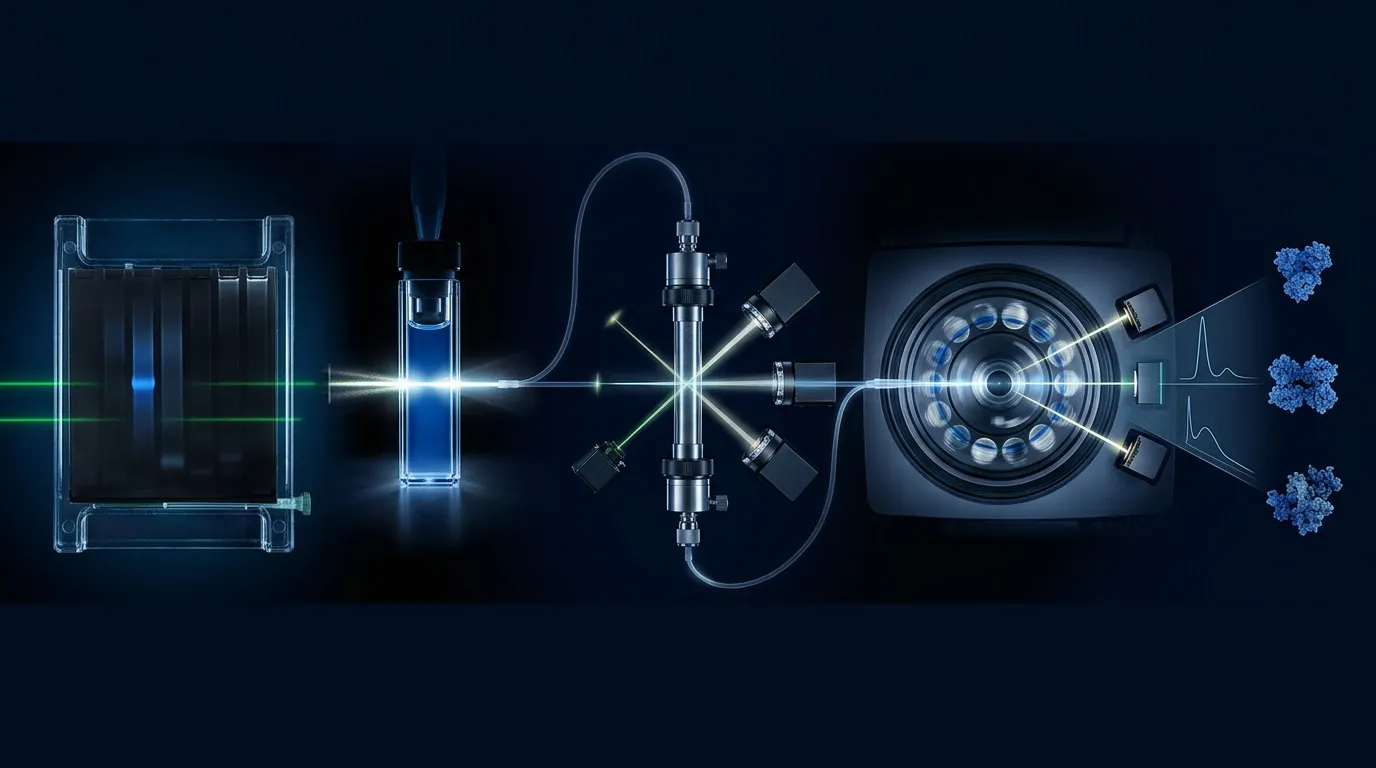
SEC-MALS. Definitive molecular weight measurement. Particularly important for nanodisc samples, where SEC-MALS confirms disc stoichiometry (one or two MSP copies plus expected lipid mass plus the target). For detergent samples, MALS partitions micelle and protein contributions, giving the true protein MW.
-
Negative-stain EM. Quick visual confirmation of monodispersity, especially for nanodiscs and SMALPs where shape heterogeneity is the dominant failure mode.
-
Activity assay. Where available, a functional assay validates that the sample is not just intact but functional. For receptors this is ligand binding; for transporters this is substrate transport or ATPase; for enzymes this is the catalytic activity in the relevant lipid environment.
-
Mass spectrometry. Intact-mass MS confirms the target identity and detects unexpected modifications. Top-down or lipidomics MS on SMALP samples can profile the co-extracted native lipid composition.
A prep that passes all seven of these is ready for high-stakes downstream work. A prep that fails one or more should be redone or escalated to a reconstitution-strategy change before committing further resources.
Designing the Right Reconstitution Workflow With Orbion
Choosing among detergent, nanodisc, and SMALP is partly a property of the protein and partly a property of your readout. Orbion's AstraUNFOLD topology and disorder analysis returns a per-residue prediction of transmembrane helices, signal-anchor regions, and the length of any cytosolic or extracellular disordered tails—the same features that dictate whether a small (MSP1D1) or large (MSP2N2) disc is appropriate, and whether the protein's loops are likely to be sensitive to detergent micelle curvature. AstraSUIT flags expression-system suitability, which downstream constrains the achievable scale and the extraction strategies that are realistic at that scale.
For protocol design itself, the Bench module generates extraction and reconstitution protocols parameterized on the predicted topology, expected yield, and the chosen downstream assay. The output is not a recipe to follow blindly; it is a starting set of buffer compositions, MSP variants, lipid ratios, and detergent choices that match published successes for proteins with similar topological and physicochemical signatures, which can then be adapted by the bench biochemist.
References
-
Bayburt TH & Sligar SG. (2003). Self-assembly of single integral membrane proteins into soluble nanoscale phospholipid bilayers. Protein Science, 12(11):2476–2481. PMC2323882
-
Denisov IG & Sligar SG. (2016). Nanodiscs for structural and functional studies of membrane proteins. Nature Structural & Molecular Biology, 23(6):481–486. PMC5267624
-
Knowles TJ, Finka R, Smith C, Lin YP, Dafforn T, Overduin M. (2009). Membrane proteins solubilized intact in lipid containing nanoparticles bounded by styrene maleic acid copolymer. Journal of the American Chemical Society, 131(22):7484–7485. DOI
-
Lee SC, Knowles TJ, Postis VLG, Jamshad M, Parslow RA, Lin YP, Goldman A, Sridhar P, Overduin M, Muench SP, Dafforn TR. (2016). A method for detergent-free isolation of membrane proteins in their local lipid environment. Nature Protocols, 11(7):1149–1162. DOI
-
Chae PS, Rasmussen SGF, Rana RR, Gotfryd K, Chandra R, Goren MA, Kruse AC, Nurva S, Loland CJ, Pierre Y, Drew D, Popot JL, Picot D, Fox BG, Guan L, Gether U, Byrne B, Kobilka B, Gellman SH. (2010). Maltose-neopentyl glycol (MNG) amphiphiles for solubilization, stabilization and crystallization of membrane proteins. Nature Methods, 7(12):1003–1008. DOI
-
Oluwole AO, Danielczak B, Meister A, Babalola JO, Vargas C, Keller S. (2017). Solubilization of membrane proteins into functional lipid-bilayer nanodiscs using a diisobutylene/maleic acid copolymer. Angewandte Chemie International Edition, 56(7):1919–1924. DOI
-
Frauenfeld J, Löving R, Armache JP, Sonnen AFP, Guettou F, Moberg P, Zhu L, Jegerschöld C, Flayhan A, Briggs JAG, Garoff H, Löw C, Cheng Y, Nordlund P. (2016). A saposin-lipoprotein nanoparticle system for membrane proteins. Nature Methods, 13(4):345–351. DOI