A fluorescent dye can be added to a culture today. A genetically encoded sensor may require construct design, delivery, expression, and validation before the first useful image. That difference matters, but it is only one part of the choice.
Choose between dyes and genetically encoded biosensors by following the measurement through the whole experiment. Consider what must be detected, where the reporter must reside, how often it must be observed, and whether the model tolerates the delivery and measurement process.
Neither category is uniformly more sensitive, less perturbing, or easier to interpret. Chemical probes can offer practical access to difficult cells. Genetically encoded sensors can provide selective expression and compartment targeting. Hybrid approaches combine a genetic tag with a synthetic ligand. The useful comparison is between specific methods under the conditions you need.
Key Takeaways
- Separate a fluorescent label from a sensor whose output reports a defined quantity or activity.
- Compare delivery, localization, kinetics, reversibility, calibration, and biological effects together.
- Genetic targeting is powerful, but expression and fusion architecture can alter the system.
- Chemical loading is convenient only when uptake, retention, and probe chemistry are understood.
- A hybrid protein tag and dye can combine advantages while adding its own validation requirements.
Start With the Readout, Not the Reagent Category
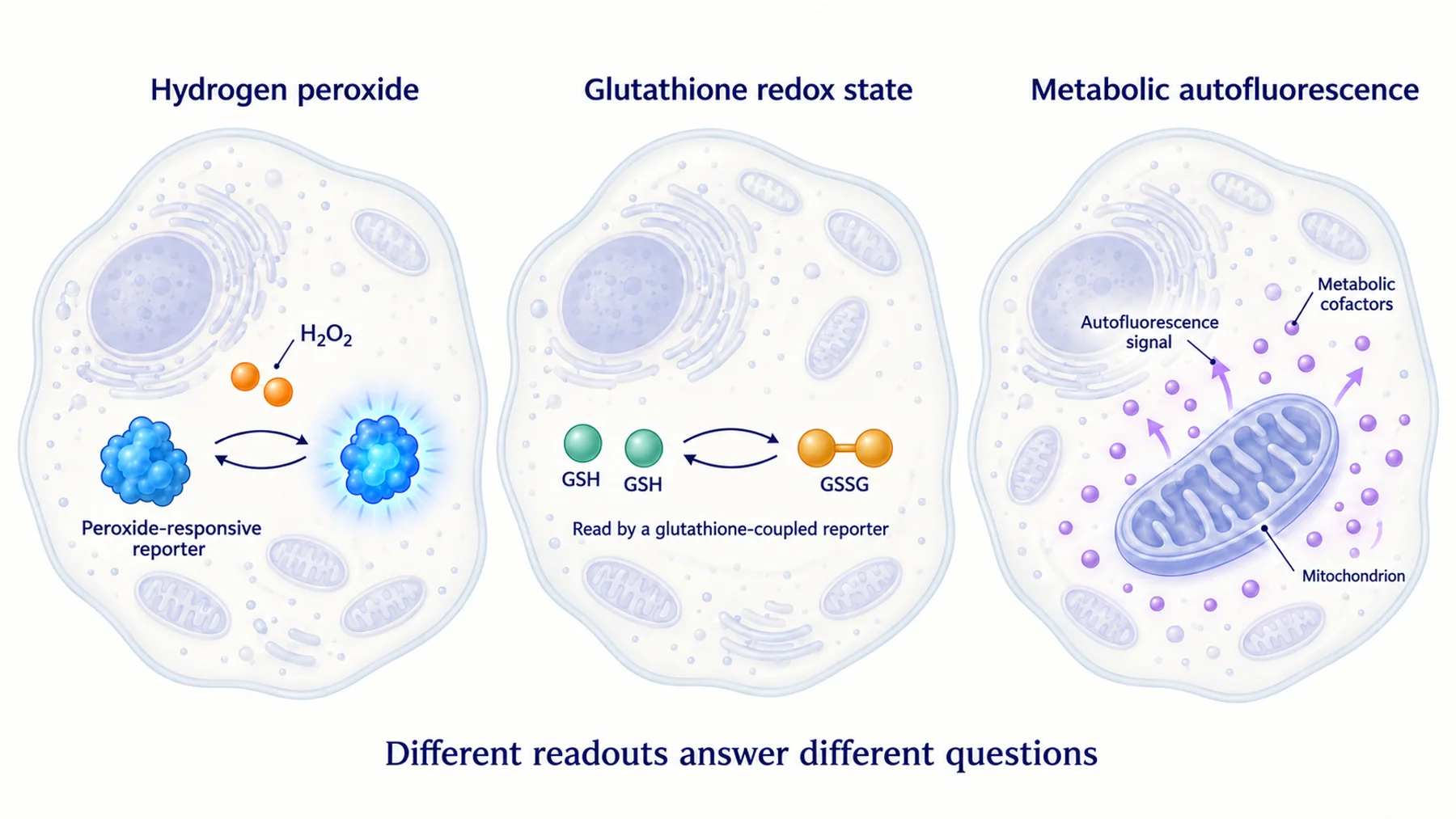
“Dye” and “genetically encoded” describe aspects of reagent design and delivery. They do not specify what is measured. A dye can label a membrane, respond to an ion, or accumulate a reaction product. A protein can be a location marker, an analyte-binding reporter, or an enzyme-activity sensor.
Ask how the biological event changes the output. Is fluorescence proportional to label amount? Does analyte binding change intensity or energy transfer? Does a reaction create a fluorescent product? Does the reporter move between compartments? Those mechanisms determine which controls and calibration are meaningful.
The ATeam study illustrates a genetically encoded ATP-responsive FRET design. HyPer7 illustrates a different genetically encoded strategy for peroxide-associated measurements. Sharing a delivery category does not make their response models interchangeable.
A fluorescent protein fused to a target may show localization without reporting target activity. Likewise, staining mitochondria does not necessarily measure mitochondrial respiration. Define the link between the signal and the intended quantity before comparing brightness, wavelength, or price.
Follow Each Delivery Route
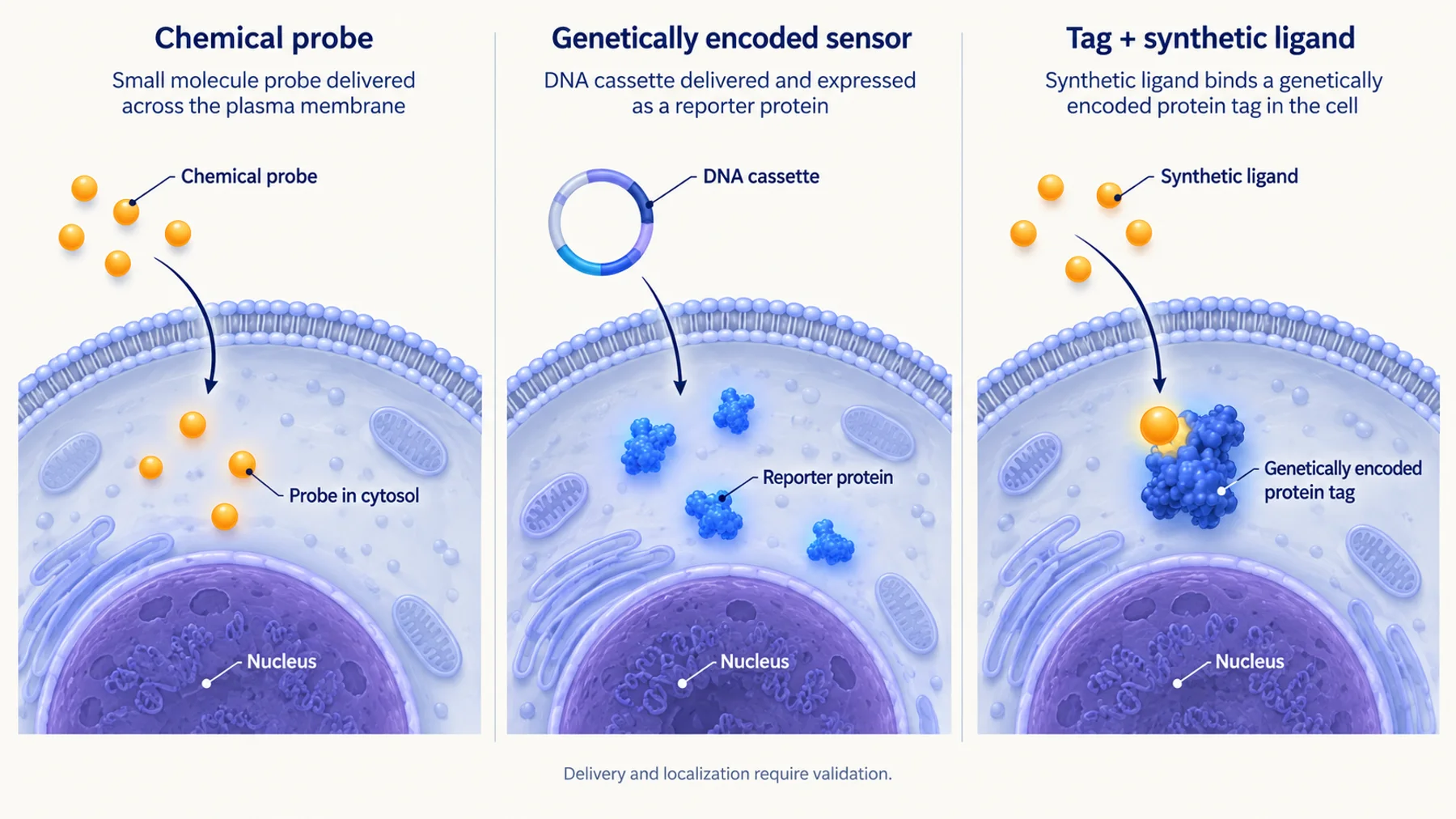
Chemical probes must reach the intended environment. Entry can depend on membrane permeability, transport, intracellular processing, and the formulation. The signal may also depend on retention, efflux, sequestration, or binding to unintended components.
Genetically encoded reporters require an appropriate expression route. Successful delivery of genetic material does not guarantee useful reporter production. Expression, folding, maturation or cofactor loading, localization, and stability all contribute to the final signal.
Hybrid approaches require both a functional genetic component and delivery of the synthetic partner. HaloTag, for example, uses a genetically encoded protein tag that reacts with a synthetic ligand. That architecture enables labeling strategies, but a tag-plus-dye combination is not automatically an analyte sensor.
Figure 1. Delivery routes introduce different checkpoints. The schematic compresses cellular transport and expression steps; each route still requires verification of the final reporter location and behavior.
The practical distinction is often the time needed to establish a reliable assay. A quick loading procedure can still require extensive controls. A longer genetic setup can become efficient if a validated stable model supports many future experiments. Evaluate the full program rather than the first image alone.
Compare What Matters for the Experiment
| Requirement | Chemical probe considerations | Genetically encoded sensor considerations |
|---|---|---|
| Short pilot in an existing cell model | Loading may be straightforward if a suitable probe exists | Delivery and expression may dominate setup time |
| Compartment-specific measurement | Depends on chemical targeting and distribution | Targeting sequences and fusion design can help |
| Repeated longitudinal observation | Retention, efflux, bleaching, and reloading matter | Expression stability, maturation, turnover, and burden matter |
| Primary cells or sensitive models | Avoids some genetic manipulations but can still perturb cells | Delivery tolerance and altered cell state need testing |
| Thick tissue or organoids | Penetration and accumulation can be heterogeneous | Expression and optical access can be heterogeneous |
| Quantitative interpretation | Probe amount, reaction chemistry, and calibration | Response model, abundance, environment, and calibration |
This table is a set of questions, not a ranking. A chemically targeted probe can outperform a poorly localized genetic reporter. A well-designed genetic sensor can outperform a dye that accumulates unpredictably. The relevant evidence comes from the specific assay in the intended sample.
Ask Whether the Sensor Can Follow Recovery
For a one-time endpoint, an accumulating reaction product may be useful. For repeated rises and falls in the same cells, reversibility and recovery become essential. A reporter that remains activated after the initiating event can blur separate events into a single prolonged signal.
Determine whether the probe responds by reversible binding, a reversible chemical cycle, irreversible conversion, or another mechanism. Then test the time course of both response and return. The recovery of the biological system and the recovery of the reporter are separate quantities.
Reporter replenishment also matters. A genetically encoded system may produce new protein over time, while an added chemical probe may be depleted or lost. Neither process guarantees stable measurement. New reporter can change the baseline, and reloading can change distribution or disturb the sample.
For longitudinal work, define how you will distinguish a biological change from reporter turnover, loss, or expression drift. A stable reference or ratiometric design can help in some cases, but it introduces its own assumptions. Inspect the underlying channels and validate the reference under the treatment conditions.
Localization Is an Experimental Result
A product label or targeting sequence suggests where a probe should go. The observed distribution determines what the measurement actually samples. Verify that distribution in the same model, treatment, and time window used for the main experiment.
For chemical probes, examine whether signal arises in the cytosol, membrane, endosomes, extracellular matrix, or a mixture. A punctate pattern can indicate a different environment from the one assumed by a bulk measurement. The loading conditions that maximize brightness may also maximize sequestration.
For genetic sensors, a targeting element can be blocked by fusion orientation or altered by neighboring domains. Partial import, cleavage, or reporter escape can create a mixture of compartments. If the signal includes both intended and unintended locations, quantify that limitation rather than describing the construct as exclusively targeted.
Our guides to fusion-tag placement and linker design explain why these design choices deserve attention. In a sensor, localization and response coupling can both depend on the same architecture.
Genetic Encoding Does Not Eliminate Perturbation
An expressed sensor occupies space, binds molecules, and can interact with cellular machinery. Depending on its mechanism and abundance, it may buffer an analyte, compete with endogenous partners, or alter signaling.
The GCaMP-X study demonstrated a specific interaction between components of a calcium reporter and endogenous calcium-channel regulation. That example supports testing biological effects at relevant expression levels. It does not establish that every protein reporter has the same limitation.
Compare reporter-positive and appropriate reporter-negative models using a functional endpoint relevant to the experiment. A generic viability assay may miss a change in differentiation, excitability, metabolism, or secretion. If the goal is to study one of those processes, the health assessment should be sensitive to it.
Use an expression range that is practical and reproducible. Selecting the brightest cells can preferentially select a perturbed population. If lowering expression preserves the biological response while improving cell function, that may be a better assay even if the images are less striking.
Chemical Loading Does Not Eliminate Perturbation Either
Chemical probes can interact with membranes, organelles, enzymes, or redox chemistry. Solvent, loading conditions, wash steps, and incubation time are part of the intervention. Include appropriate vehicle and handling controls rather than attributing all effects to the final fluorescent species.
Probe concentration should be evaluated against both signal and biological function. More reagent can increase brightness while changing localization, background, or toxicity. A usable loading range is therefore more informative than a single condition chosen for maximum intensity.
Also consider the measurement environment. Removing medium, replacing it with an imaging formulation, or washing repeatedly can change the biology. A comparison between a dye-loaded sample and an untouched genetic-reporter sample may confound reporter category with handling.
Match the full workflow when making a head-to-head comparison. If one method requires extra processing, quantify that burden as part of practical performance while separating it from the intrinsic optical properties of the reporter.
Three-Dimensional Models Add Two Access Problems
The first access problem is delivery: can the reporter reach or be expressed in the relevant cells? The second is optical: can excitation reach those cells and can emitted light be collected with sufficient quality? Solving one does not solve the other.
A dye may penetrate a tissue unevenly. A genetic reporter may be expressed only in a subset of cells. Either can produce an apparently well-labelled surface while leaving the interior unmeasured. Report depth coverage and the fraction of the model represented by the analysis.
Existing optical probes can already support local measurements in 3D models. Okkelman et al. used phosphorescence lifetime imaging to study organoid oxygenation. This is a useful reminder to compare a proposed genetic reporter with an established chemical-probe approach suited to the same question.
For low-oxygen conditions, distinguish reporter maturation from sensing. Flavin-based reporters described by Drepper et al. can avoid the oxygen requirement of GFP-like chromophore formation. That property supports a particular imaging use; it does not by itself provide a calibrated oxygen readout.
A Decision Path for Selecting a Candidate
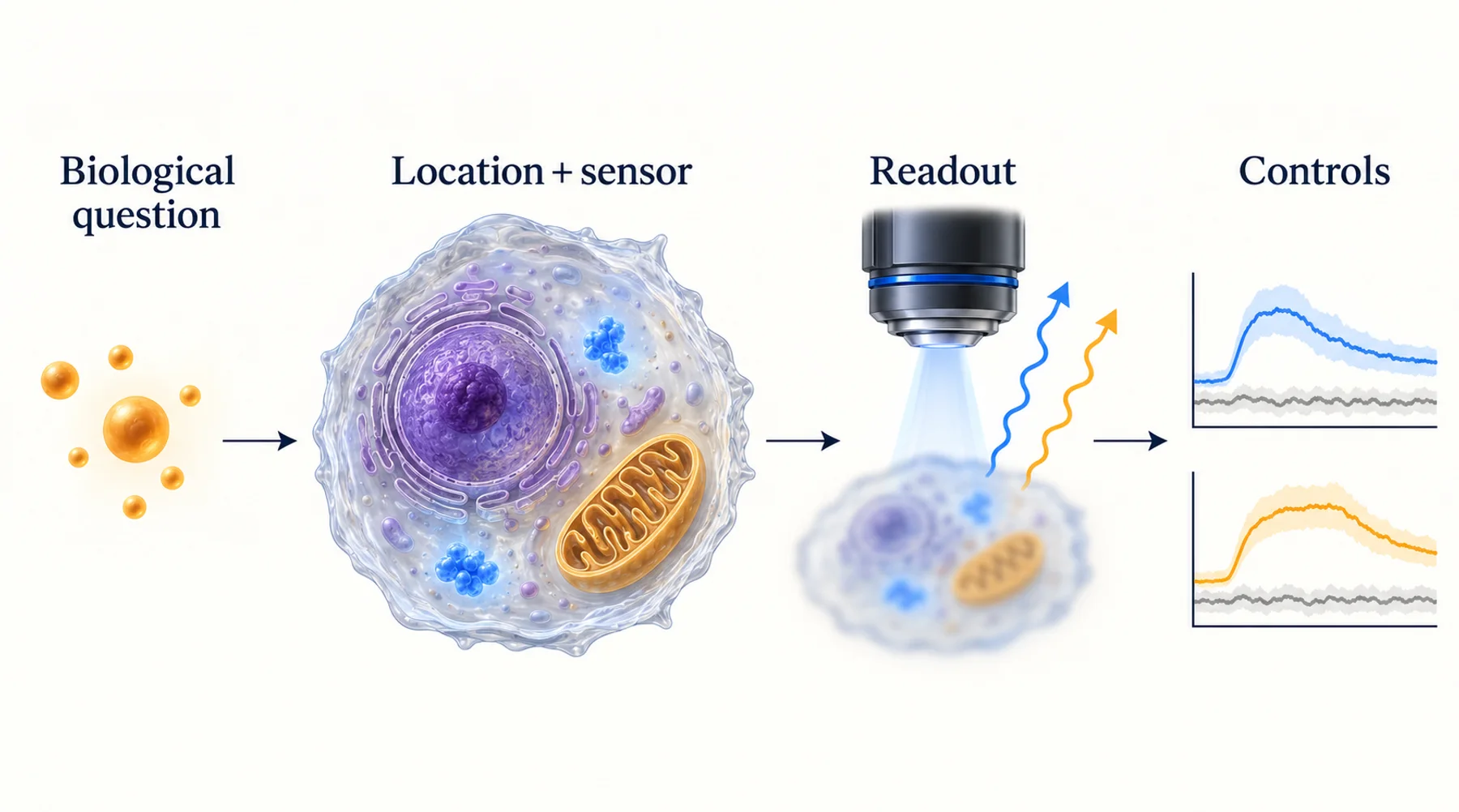
Figure 2. Select candidates through experimental requirements rather than a universal preference for a reagent class. The final comparison still needs matched tests in the intended model.
Start by asking whether a method exists for the required quantity and operating range. If several do, eliminate those incompatible with the model's delivery constraints. Then compare localization, kinetics, reversibility, optical compatibility, and the number of samples that can be measured reproducibly.
Do not force a reporter category onto a question it cannot answer. If genetic modification is unacceptable and no chemical probe provides the needed specificity, a different measurement strategy may be necessary. That can include sampling, an integrated extracellular sensor, or a different experimental endpoint.
Keep the shortlist small enough for a controlled pilot. Define common acceptance criteria and a comparison that reflects the intended use. A microscope-only brightness comparison is insufficient if the eventual assay requires days of observation, repeated dosing, or multiple donor preparations.
A Worked Comparison in a Sensitive Cell Model
Suppose a team wants to follow a reversible intracellular change in primary cells over several hours. This hypothetical example has two candidates: an added chemical probe and an expressed protein sensor.
For the chemical probe, test whether loading is reproducible, the reporter reaches the intended compartment, and the signal remains interpretable after washout or continued exposure. Measure retention and background over the full observation period, not only immediately after loading.
For the genetic sensor, test delivery tolerance, expression distribution, localization, and response capacity. Compare an expression range and check whether the reporter changes the functional endpoint being studied. A small population of highly expressing cells should not silently become the basis of a claim about the whole culture.
Use matched treatment timing and a common independent endpoint where feasible. Compare the fraction of usable samples, uncertainty in the response, recovery behavior, preparation time, and biological effects. The method with the largest signal may not be the method that provides the most reproducible answer across donors.
If the chemical method gives a robust endpoint but cannot follow recovery, it may still be appropriate for a narrower question. If the genetic reporter follows recovery but changes the cells, it may need redesign. The pilot should produce a specific decision rather than a general declaration that one technology is better.
Keep the Comparison Fair
Report both successful and unusable samples. Excluding poorly loaded cells from one method while retaining all cells from another creates an asymmetric comparison. Define exclusion criteria before examining treatment effects, and report how often each method fails them.
Separate repeatability within one preparation from reproducibility across preparations, days, operators, or donors. An optimized stable line may perform consistently while a primary-cell delivery workflow varies. That variability is relevant to the use case even when the reporter chemistry is sound.
Include practical costs beyond reagent price: construct verification, delivery optimization, instrument time, failed preparations, analysis, and maintenance of the model. A reusable genetic system may repay a longer setup over many studies; a chemical probe may be more efficient for a limited question in an existing culture.
Finally, preserve the claim boundary. A successful label establishes visibility. A responsive probe establishes a response under tested conditions. A validated biosensor assay establishes a defined measurement with known limitations. These are useful but different achievements.
Where New Protein Tools Could Help
New reporters should be evaluated against a practical unmet measurement requirement, such as localization, repeated readout, or separation from background. Protein engineering can alter those properties, but each change may also affect expression, chemistry, or cell compatibility.
Nebula investigates responsive proteins as potential research tools. A promising candidate would still need comparison with suitable dyes, established genetic sensors, or hybrid methods in the intended application. The strongest use case begins with a clear experimental limitation and a measurable improvement.
Common Questions
Are genetically encoded sensors always better for long experiments?
No. They can support persistent expression and targeting, but reporter turnover, expression drift, biological burden, and illumination still matter. Some chemical methods can also support repeated measurements when validated appropriately.
Is a fluorescent protein fusion a biosensor?
It depends on the claim. It may be a useful localization label. Reporting an analyte, activity, or state requires a demonstrated relationship between that quantity and the output.
Can I compare two methods using their published maximum response?
Only cautiously. Published maxima may come from different conditions, instruments, concentrations, and models. A matched comparison over the range and timescale needed for the experiment is more informative.
Diagram note: the cover and figures are conceptual illustrations, not experimental results. Numerical examples are identified in the text.